
Deliver enterprise-grade reliability with end-to-end software testing solutions that combine AI-driven automation testing, performance engineering, security testing and compliance validation.













Why Software Testing Matters

Software testing is the process of making sure an application works the way it should. It helps catch problems early so the final product is reliable, secure, and user-friendly. At Programming.com, we provide end-to-end QA that covers:
Verification
Ensuring the product is built right and stable.
Validation
Ensuring it delivers business value and user trust.
From unit tests to acceptance testing, and from functional validation to performance, security, and compliance checks, we embed quality across the lifecycle.
With AI-driven automation testing, DevOps integration and global QA delivery, we help enterprises launch software that is resilient, scalable and future-ready.
Don’t settle for “it works.” Aim for it to
work perfectly.
Our QA & Testing Services
Automation Testing Services
We implement AI/ML-powered automation using Selenium, Cypress, Playwright and Appium. Our self-healing scripts reduce flaky failures and keep pace with frequent releases. By embedding automation into CI/CD pipelines, we help enterprises cut regression cycles by up to 70% while ensuring speed and coverage.
Manual Testing
Our testers specialize in usability, accessibility, and exploratory testing to validate user journeys that automation can’t predict. From WCAG/ADA compliance to cross-browser/device validation, we ensure your product works for all users, in all environments.
Performance Testing
We help enterprises avoid slowdowns by simulating real-world loads, stress and long-duration usage. Our performance engineers fine-tune systems for peak demand with capacity planning and observability-driven QA. Tools like Grafana, Prometheus, and New Relic provide actionable insights that keep your applications resilient and fast.
Security & Penetration Testing
Our security experts embed DevSecOps practices into your SDLC, validating vulnerabilities early. We perform web, mobile, API and cloud penetration tests aligned with OWASP Top 10 and industry regulations. With HIPAA, PCI-DSS, SOC 2 and GDPR compliance testing, we help you launch with confidence and security.
Mobile App Testing
Mobile-first businesses need flawless performance across devices and networks. We validate apps on real devices and simulators in our device labs, covering geolocation, network conditions and battery usage. Our testing ensures consistent user experiences whether on Android, iOS, or cross-platform frameworks.
API & Integration Testing
We conduct contract testing for REST, SOAP and GraphQL APIs, while monitoring schema drift to prevent integration failures. With service virtualization and automation frameworks, we ensure smooth communication across microservices and enterprise applications.
Accessibility & Compliance Testing
AI-driven applications need specialized quality controls. We test for prompt injection risks, jailbreak resilience and bias detection. Our frameworks measure factual accuracy, toxicity, and guardrail compliance. With automated evaluation pipelines, we ensure your AI models are trustworthy, safe and enterprise-ready.
Data & Analytics QA
We validate ETL pipelines, perform schema and lineage testing and ensure completeness, freshness and accuracy. Using synthetic test data, we maintain privacy while guaranteeing data reliability for analytics, BI and AI workloads.
AI/LLM Application Testing
AI-driven applications need specialized quality controls. We test for prompt injection risks, jailbreak resilience and bias detection. Our frameworks measure factual accuracy, toxicity, and guardrail compliance. With automated evaluation pipelines, we ensure your AI models are trustworthy, safe and enterprise-ready.
QA Consulting
We help enterprises build long-term QA maturity. Our consultants assess processes, define test strategies and set up Centers of Excellence aligned with Agile and DevOps. From toolchain optimization to KPI-driven governance, we enable QA to become a business enabler, not a bottleneck.
KPIs & SLAs We Commit To
Our Key Quality Metrics

>95%
Catch defects before they hit production

<3%
Minimal issue escape to production

>75%
Within 3 sprints

<24h
Rapid turnaround for critical fixes

>90%
Stable releases with high confidence
Our KPIs = Your Confidence
Certifications & Cloud Partnerships
Our global certifications and partnerships reflect our commitment to quality, security, and trusted IoT development services.

ISO 9001

ISO 27001

AWS Partner

Microsoft Azure Partner

Google Cloud
Case Studies
Our QA and testing services have helped global enterprises reduce risks, accelerate delivery and build customer trust.

NBC – QA Transformation for Global Media Platforms
Business Impact

NBC – QA Transformation for Global Media Platforms

SAP Ariba – QA Center of Excellence for Enterprise Solutions
Business Impact
SAP Ariba – QA Center of Excellence for Enterprise Solutions

Coldplay + SAP – Fan Engagement App QA
Business Impact
Coldplay + SAP – Fan Engagement App QA
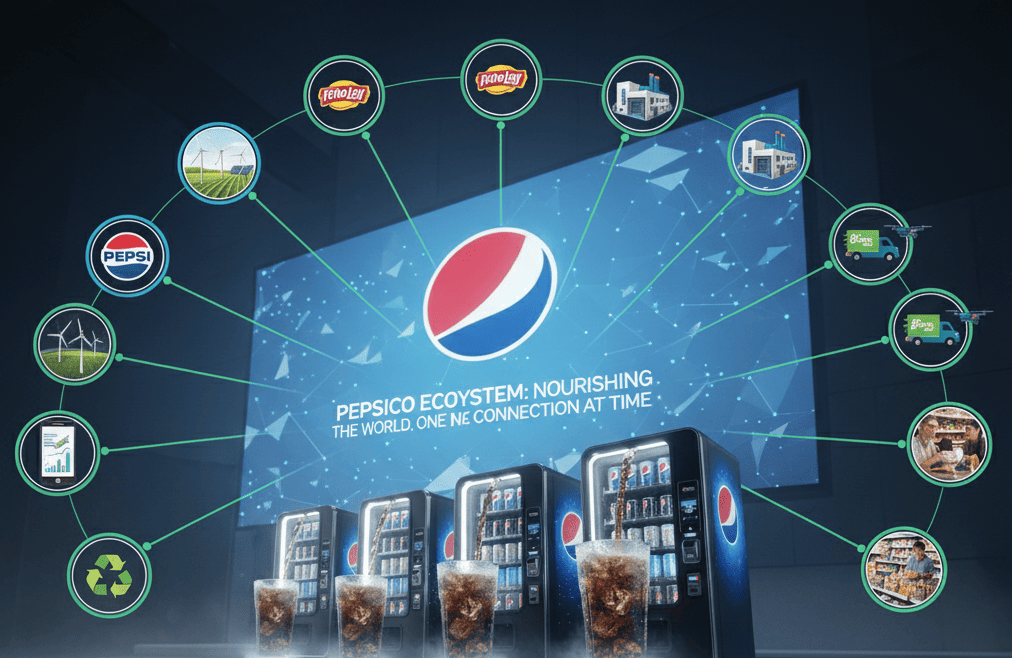
PepsiCo – QA for IoT Beverage Ecosystem
Business Impact
PepsiCo – QA for IoT Beverage Ecosystem
NBC – QA Transformation for Global Media Platforms
Benefits
SAP Ariba – QA Center of Excellence for Enterprise Solutions
Benefits
Coldplay + SAP – Fan Engagement App QA
Benefits
PepsiCo – QA for IoT Beverage Ecosystem
Benefits
Industries We Serve
We deliver QA and software testing services tailored to the unique needs of different industries, ensuring compliance, scalability and superior user experiences.
BFSI & Fintech
We secure financial platforms with PCI-DSS, PSD2 and Open Banking compliance, while ensuring flawless transactions and regulatory trust.
Healthcare & Pharma
Our QA frameworks ensure HIPAA compliance, patient data security and clinical application reliability, supporting safe digital healthcare.
Automotive & Mobility
From infotainment to autonomous systems, we validate ISO 26262 safety, predictive analytics and connected vehicle platforms.
Government & Public Sector
We test citizen-centric apps for scalability, accessibility (508/WCAG) and security, ensuring inclusive digital governance.
Retail & Ecommerce
Our QA accelerates omnichannel experiences, checkout reliability and performance testing for seasonal peaks.
Telecom & Media/OTT
We validate streaming platforms, cross-device compatibility and 24/7 uptime, delivering seamless digital entertainment.
Logistics & Supply Chain
Our QA secures IoT-enabled operations, ERP/CRM integrations and real-time visibility systems for uninterrupted delivery flows.
Energy & Utilities
We assure the reliability of SCADA systems, IoT devices and smart grid platforms, enabling safe and efficient energy distribution.
Our QA Engagement Models
We adapt to your business needs with flexible engagement models that balance cost, speed and control.
01
QAaaS
On-demand testing with scalable coverage and flexible pricing.
02
Dedicated Teams
Long-term QA pods embedded into your delivery organization.
03
Project-Based
Fixed-scope QA for launches, migrations, or compliance needs.
04
Consulting & CoE
Strategic QA advisory and Center of Excellence setup.
Why Choose Programming.com for Startup Software Development?
01 AI-Powered QA
Automation + self-healing + AI-driven test coverage.
02 Global Delivery
Offshore, nearshore, and onshore models with 24/7 coverage.
03 Compliance-First
HIPAA, PCI-DSS, WCAG, ISO 26262, SOC 2.
04 Proven ROI
70% faster regression cycles, 60% fewer production defects.
05 Maturity & Scale
2000+ engineers, ISO-certified, Fortune 500 clients.
Technology Stack for Software Testing
We leverage industry-leading tools to deliver automation, performance, security, and DevOps-ready QA.

Selenium

Cypress

WebdriverIO

Playwright
Selenium
Cypress
WebdriverIO
Playwright
Our QA Process


Discovery & Planning
Define scope, success KPIs, and select the right toolchain.
Test Design
Create test cases, automation frameworks, and acceptance criteria.
Environment & Data Setup
Configure CI/CD pipelines, manage test data, and set up service virtualization.
Execution
Run manual, automation, performance, and security test cycles.
Defect Tracking & Reporting
Log and track issues with seamless integration to Jira, Azure DevOps, and GitHub.
Continuous Optimization
Apply analytics, predictive QA, and SLA monitoring to improve with every release.
Your release, our responsibility.
Frequently Asked Questions
What are Quality Assurance and Testing Services?
Quality Assurance (QA) and Testing Services ensure software products are reliable, secure, and high-performing. QA focuses on improving processes to prevent defects, while testing identifies and resolves bugs before release — guaranteeing seamless user experiences and business continuity.
What types of software testing are essential in 2026?
Modern software testing strategies include multiple specialized approaches:
- Functional & Regression Testing – validates business logic and detects code regressions.
- Automation Testing – speeds up test cycles using tools like Selenium and Cypress.
- Performance & Load Testing – ensures scalability under stress using JMeter or k6.
- Security & Penetration Testing – safeguards applications against vulnerabilities.
- Mobile & Cross-browser Testing – ensures consistent experiences across devices.
- Accessibility Testing – verifies compliance with WCAG 2.2 standards.
- AI & API Testing – uses AI for predictive coverage and validates backend integrations.
- User Acceptance Testing (UAT) – confirms readiness for production deployment.
How is AI transforming software testing in 2026?
AI is revolutionizing QA through automation and intelligent insights. It enables predictive defect analysis, visual testing, and adaptive regression cycles — improving efficiency, speed, and coverage.
- AI-powered tools generate test scripts automatically.
- Self-healing tests reduce manual maintenance.
- Machine learning identifies risk-prone areas in codebases.
- Natural language test authoring simplifies test creation for non-technical users.
What are the key benefits of implementing QA automation?
QA automation accelerates testing cycles while ensuring accuracy and consistency across environments.
- Faster release cycles & continuous testing within CI/CD pipelines.
- Higher test coverage and early defect detection.
- Reduced manual effort and operational costs.
- Improved accuracy and repeatability of results.
- Increased developer productivity and collaboration.
- Supports agile delivery without compromising quality.
What tools and frameworks are most used in QA automation?
Enterprises rely on a combination of test automation frameworks and modern CI/CD tools to streamline QA operations.
- Automation frameworks: Selenium, Cypress, Playwright, Appium.
- API & performance tools: Postman, JMeter, k6.
- BDD & CI/CD tools: Cucumber, Jenkins, GitHub Actions.
- AI-based tools: Copilot-assisted testing and ML-driven test prioritization.
How does Quality Assurance fit into the DevOps and CI/CD lifecycle?
QA is deeply integrated into DevOps through Continuous Integration (CI) and Continuous Deployment (CD) practices, ensuring every build is automatically validated.
- Automated tests run at every code commit.
- Continuous feedback loops accelerate releases.
- Defects are detected earlier, reducing production risks.
- This approach forms the backbone of Continuous Quality (CQ).
What’s the difference between QA, QC, and Testing?
Though often used interchangeably, QA, QC, and Testing represent distinct but complementary aspects of software quality management:
- QA (Quality Assurance) – process-oriented; ensures proper methods and standards are followed.
- QC (Quality Control) – product-oriented; validates that the output meets requirements.
- Testing – the practical execution of identifying and fixing defects.
- Together, they ensure end-to-end software excellence.
How do you ensure performance and scalability of enterprise systems?
Performance engineering ensures applications remain stable and responsive under real-world load conditions.
- Conducting load, stress, endurance, and spike tests.
- Analyzing system response times and resource utilization.
- Identifying bottlenecks using observability tools.
- Ensuring scalability across distributed cloud environments.
What are the latest QA and testing trends in 2026?
Emerging QA trends reflect the evolution toward intelligent and integrated testing ecosystems:
- AI-driven and self-healing automation frameworks.
- Shift-left and TestOps strategies for earlier testing.
- Blockchain and IoT test automation.
- Continuous testing embedded in DevSecOps pipelines.
- Cloud-native test environments with container orchestration.
- Predictive QA analytics powered by machine learning.
- Ethical and accessibility compliance testing at scale.
How does Programming.com deliver end-to-end Quality Assurance services?
At Programming.com, our QA teams combine manual and automated testing with AI/ML predictive insights to ensure flawless releases.
- Comprehensive coverage across functional, security, and performance testing.
- Cloud-based test labs for scalability and reliability.
- Shorter test cycles through automation and continuous validation.
- Alignment with enterprise DevOps and agile frameworks for measurable results.
How do you measure QA success and ROI?
QA success is quantified using performance indicators that link testing outcomes to business impact.
- Defect leakage rate and automation coverage.
- Mean Time to Detect (MTTD) and Mean Time to Repair (MTTR).
- Reduced downtime and post-release defects.
- User satisfaction and release quality metrics.
- Together, these demonstrate tangible ROI from QA initiatives.
What is the future of Quality Assurance beyond 2026?
The future of Quality Assurance is evolving into Intelligent Quality Engineering (IQE) — driven by automation, AI, and predictive testing.
- Autonomous testing using AI agents and digital twins.
- AI-native defect prevention through real-time analytics.
- Integration of QA into continuous product delivery pipelines.
- A shift from reactive defect detection to proactive quality assurance.